
NODKA to Present at CODESYS Tech Talk Fall 2026 NODKA joins the fall edition of CODESYS Tech Talk with a Day 4 session on what it takes to hold a deterministic EtherCAT cycle while the same controller also feeds data…
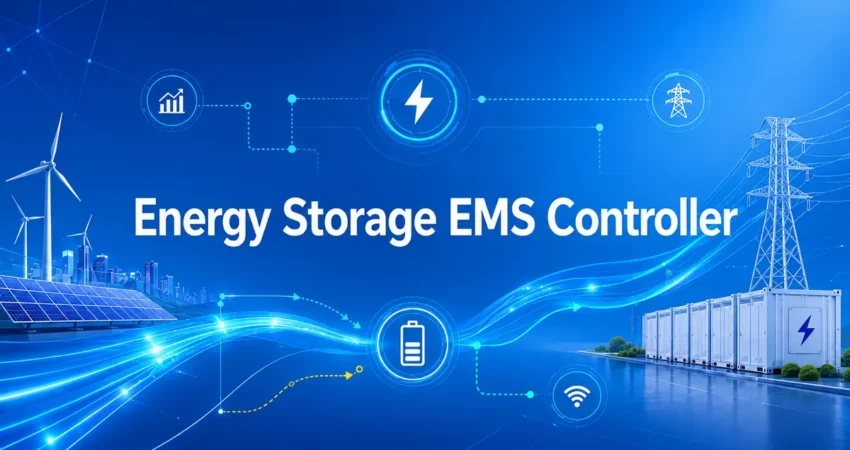
An energy storage EMS controller should be specified from the project’s function list: peak shaving, export limiting, island transfer and fire interlocks all land on different interfaces, and a mismatch usually surfaces at commissioning rather than at purchase.

IP69K and IP65 panel PCs differ on a single water test, and the IP code does not cover everything the environment will do to a panel PC: enclosure scope, connector sealing, chemical compatibility and corrosion are all settled separately. Specify…
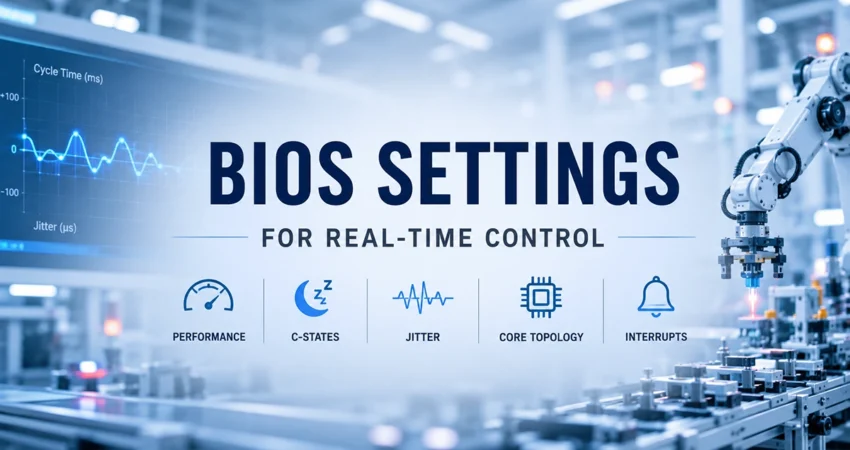
Real-time control depends on worst-case timing, not average speed. Learn which industrial PC BIOS settings can introduce latency and jitter, why the right configuration varies by platform and runtime, and how to validate BIOS changes under realistic load.
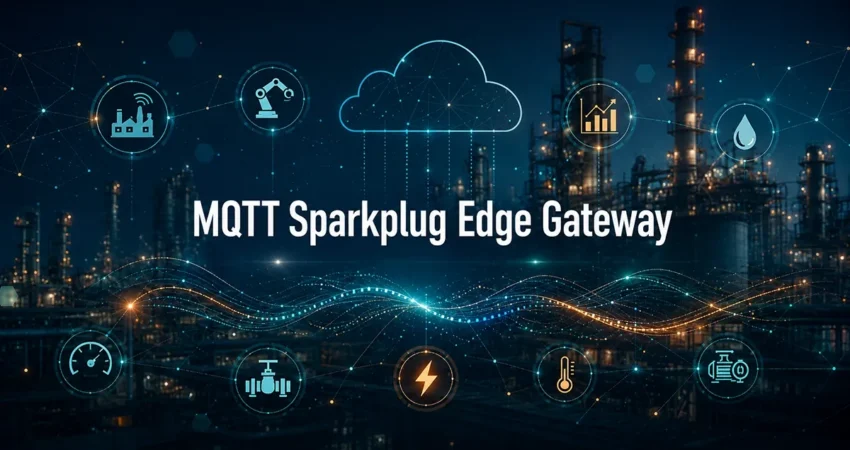
Choosing an Industrial Edge Gateway for MQTT and Sparkplug Industrial data architectures are moving away from repeated point-to-point polling by every consuming system and toward brokered, event-driven distribution. Field protocols such as Modbus may still be polled locally at the…

Soft PLCs and OpenPLC: The Industrial PC Underneath Industrial control is becoming more software-defined. Traditional PLCs remain essential, but their runtime, engineering environment, and hardware are usually delivered as one vendor-managed system. A soft PLC, or PC-based PLC, separates those…
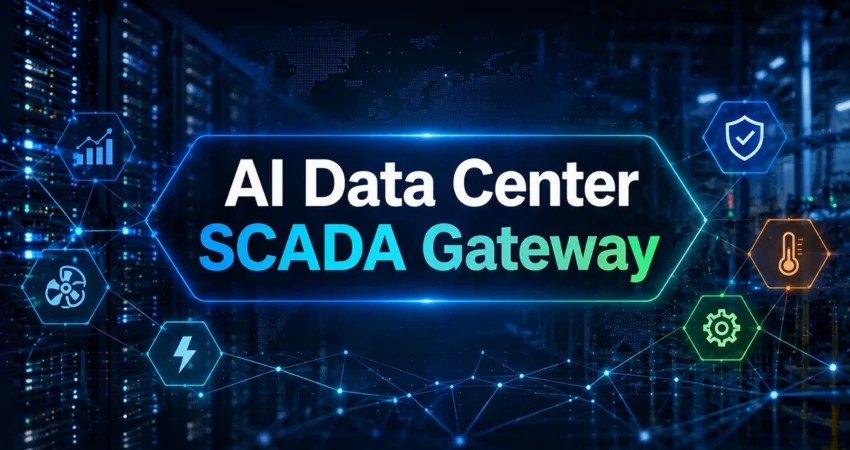
Discover how modern AI data centers use a three-layer Ignition SCADA gateway architecture to monitor power, cooling, and critical infrastructure. Learn where industrial edge gateways fit, why fanless automation PCs matter, and how NODKA supports reliable industrial monitoring deployments.
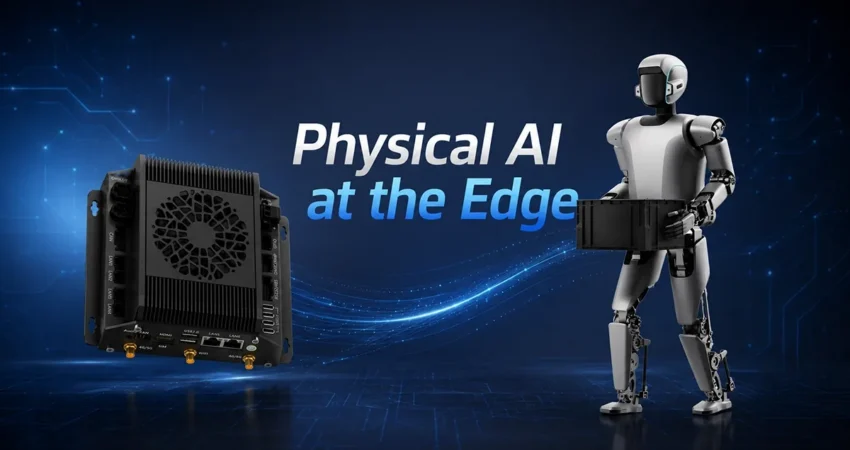
Physical AI at the Edge: The Intel Robotics AI Suite on Core Ultra Series 3 Physical AI at the edge is moving artificial intelligence from screens and cloud services into machines that can sense, reason, and act in the real…
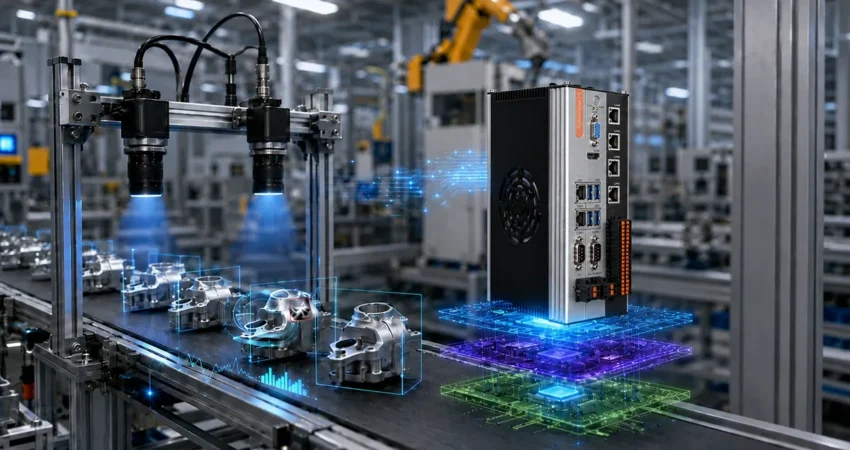
Optimizing Local LLMs for Real-Time Machine Vision on Edge AI Platforms AI-powered machine vision is moving beyond detection, classification, OCR, barcode reading, and defect inspection. The next step is adding local LLM intelligence that can help interpret inspection results, support…
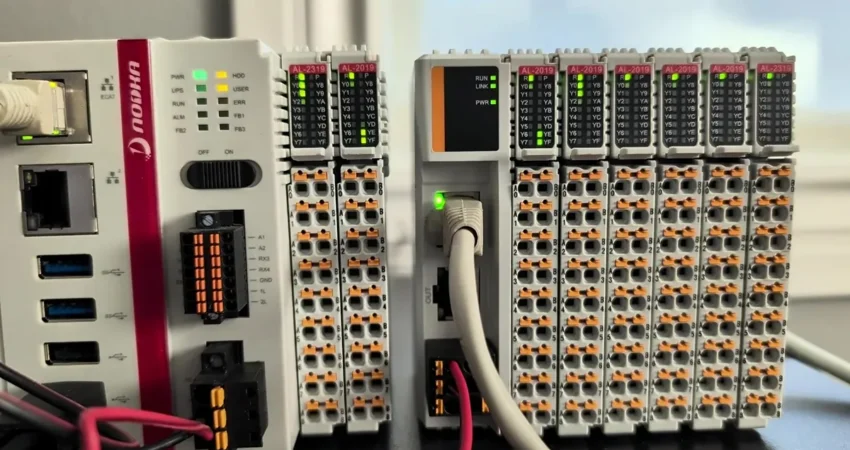
Step-by-Step Guide: Connecting a NODKA iPAC to Ignition Perspective via OPC UA A complete SCADA deployment is more than just installing software. It involves the chain of components that lets a tag value travel from a physical input on the…


